The run
Game
An isometric action RPG: mine, craft, raid a Vault, kill what guards it — and decide when to leave. The server decides what you actually carried out.
Cash out or push
Every run is the same question, asked louder the deeper you go: extract now for a smaller but certain haul, or stay while the fragment re-crystallises into something more valuable and more dangerous. It is the same uncertainty that defined the collapse of the old world — which is exactly why the game is built on it.
1. Mine
The Cave is a persistent open-air zone: iron and obsidian with a basic pickaxe, no key, no gate. It is where you go with nothing.
2. Craft
Iron plus the gem of your tier forges the key to the next Vault. The chain closes on itself: the iron Vault drops obsidian, which opens the one after it.
3. Raid
Five Vaults, one god each, in order of gem hardness. The first needs no key — you learn to forge inside it.
4. Extract
Leave with what you carry. Push further and the Vault pushes back: rising pressure, escalating enemies, defences that know they are being robbed.
Runners
Two choices, deliberately separate — because they are separate in the game. Look locks nothing and can be changed later. Class commits: it locks your weapon for the whole run of that character, and it speeds up one profession for good.
Hacker
Master of digital infiltration.
GunSignature move: Burst. +50% XP in Hacking.
Sentinel
Cybernetic guardian, fast blade.
KatanaSignature move: Combo. +50% XP in Alchemy.
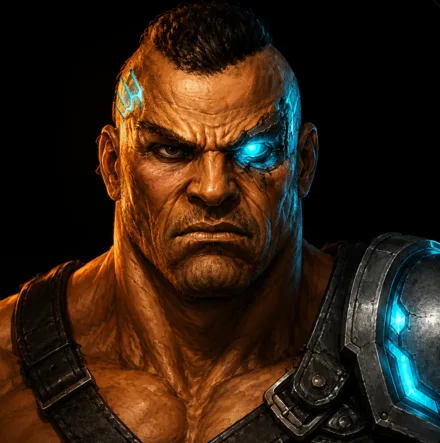
Juggernaut
Augmented brute, crowd control.
AxeSignature move: Kick. +50% XP in Mining.

Netrunner
Thin frame, bare prosthetic arm.

Blade
Light armour, straight-backed.

Colossus
Heavy build, full plating.
Professions
Three trades run alongside combat, and your class accelerates exactly one of them — a reason to pick a class beyond its weapon.
Mining
Ore from the Cave and from the Vaults. Better tiers need a better pickaxe, and the pickaxe needs what you already mined.
Alchemy
Potions and consumables — what lets you stay one room longer than is reasonable.
Hacking
The Vaults are data infrastructure. Some of what stands between you and a fragment is not a monster.
Progression, and who decides it
Levels, gear, reforges and the market all live on the server. The client never announces a result: it asks, and the server answers — a sale, a mined ore, a quest turn-in. That is not a detail of implementation, it is what makes an economy with real value possible at all. If a player's own machine could mint ore, nothing downstream would be worth anything.
Your name belongs to your wallet, not to your character: delete a Runner and you keep the name. Your identity is a signature, verified server-side — never a claim the browser makes.
What comes out of a Vault has to be worth something — the economy page is still under construction.
Enter Hyperion